



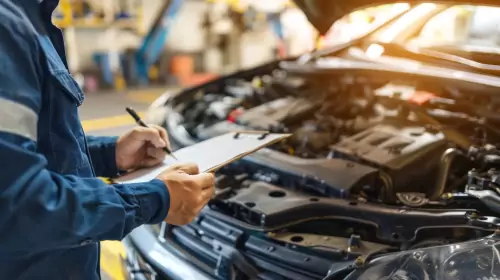

Our team is here to support you with reliable service that keeps your business moving.
For trade professionals, courier operators, and business fleet managers across Leicestershire, keeping commercial vehicles safe and roadworthy is both a legal duty and an operational necessity. An out-of-service commercial van represents lost business revenue and potential delivery delays.
While every vehicle over three years old requires an annual MOT test in the United Kingdom, commercial vehicle MOTs involve specific technical requirements depending on the size and weight of the vehicle.
Originally operating as Freeway Car and Van Rental, Senior Car and Van Hire has maintained a diverse commercial fleet for over thirty years from our Oadby and Market Harborough workshops. This guide outlines what is inspected during a commercial vehicle MOT test and how to prepare your trade van for a first-time pass.
Understanding Commercial Vehicle Test Classes
Before scheduling an MOT test, it is important to know which testing class applies to your commercial vehicle:
- Class 4 MOT: Applies to standard passenger cars, small panel vans, and light commercial vehicles with a Gross Vehicle Weight (GVW) of up to 3,000kg.
- Class 7 MOT: Applies to larger commercial goods vehicles with a Gross Vehicle Weight (GVW) between 3,001kg and 3,500kg. This class covers high-capacity transit vans, long-wheelbase cargo vans, drop-side tippers, and Luton removal vans.
Because Class 7 vehicles carry heavier payloads, the MOT inspection utilizes specialised testing equipment to evaluate brake efficiency under weight and verify chassis structural integrity.
Core Inspection Areas During a Commercial MOT
During a commercial vehicle MOT test, a DVSA-approved technician performs a detailed inspection of key mechanical, structural, and safety components.
1. Braking Systems and Efficiency
Commercial vans carry heavy cargo, making brake health paramount. The technician measures brake pad thickness, checks brake discs for scoring or corrosion, inspects hydraulic brake lines for leaks, and evaluates handbrake efficiency. On Class 7 vehicles, an automated roller brake tester evaluates braking force under simulated load conditions.
2. Tyres, Wheels, and Suspension
Tyres must maintain a minimum legal tread depth of 1.6mm across the central three-quarters of the tyre face. The technician inspects tyre sidewalls for cuts, bulges, or uneven wear caused by suspension misalignment. Shock absorbers, suspension bushes, springs, and wheel bearings are thoroughly tested for excessive play or mechanical wear.
3. Steering and Alignment
The steering assembly, power steering fluid lines, rack-and-pinions, and tie-rod ends are checked for security and smooth operation. Steering play must fall within strict DVSA tolerance limits.
4. Visibility, Lights, and Mirrors
All exterior lights, including headlights, brake lights, indicators, reversing lights, and registration plate illumination, must function correctly. The windscreen is inspected for chips or cracks within the driver's direct field of vision, and wiper blades must sweep cleanly without smearing.
5. Exhaust Emissions and Fuel Systems
The exhaust system is checked for leaks, secure mounting brackets, and the presence of mandatory catalytic converters or Diesel Particulate Filters (DPF). Exhaust emissions are measured using electronic smoke meters to ensure compliance with UK environmental standards.
6. Vehicle Structure, Load Security, and Towbars
The vehicle's chassis, cab mounts, and underbody load-bearing zones are examined for structural corrosion or rust damage. Doors, hinges, side-loading panels, and hydraulic tail-lift mountings must latch securely. If fitted, towbars and electrical towing sockets undergo mechanical safety checks.
Common Reasons Commercial Vans Fail Their MOT
Commercial vans work hard every day, leading to predictable wear patterns that often cause avoidable MOT failures. The most frequent failure points include:
- Blown Exterior Light Bulbs: A simple blown registration plate bulb or indicator bulb results in an immediate MOT failure.
- Worn Tyre Tread: Heavy payloads accelerate tyre wear, particularly on the inner edges of front drive wheels.
- Damaged Windscreen Wipers: Split or worn rubber blades on commercial windscreen wipers are a common reason for failure.
- Worn Brake Pads and Discs: Frequent stop-start urban driving in delivery vans wears down brake friction materials quickly.
How to Prepare Your Trade Van for a First-Time Pass
Performing a quick daily walk-around check before submitting your trade van for an MOT test can save your business time and money. Ensure all exterior light lenses are clean, top up windscreen washer fluid, check tyre inflation pressures, and clear clutter from the dashboard and cabin floor.
Professional Commercial MOTs in Market Harborough
At Senior Car and Van Hire, our fully equipped workshop on Riverside Place in Market Harborough features modern diagnostic bays and DVSA-approved testing facilities. Our certified technicians service and repair both light commercial trade vans and private vehicles.
If your commercial van requires extended workshop repairs to pass its MOT test, our unique dual-service operation allows us to supply an immediate replacement vehicle from our on-site hire fleet, ensuring your business stays fully operational without downtime.